

Aftercare Back Home: What Happens After Dental Treatment Abroad?
The Short Answer
After treatment abroad, your local dentist can usually provide check-ups, hygiene visits, X-rays and urgent pain relief, but may be cautious about adjusting work done elsewhere. The key is to bring complete records home, including X-rays, a treatment summary, implant system details and materials used, and to stay in contact with the clinic that treated you.


Before you book any treatment abroad, ask how follow-up works. At Patara Dent your coordinator remains your point of contact after you return home, and questions can be sent with photos at any time.
Aftercare Checklist
| When | What to do |
|---|---|
| Before you fly home | Collect your treatment summary, X-rays, implant and material details and guarantee terms |
| First days at home | Follow the diet and cleaning instructions; take medicines exactly as prescribed |
| First weeks | Report any loose parts, increasing swelling or persistent pain with photos |
| Every 6–12 months | Check-up and professional cleaning with your local dentist |
| As advised | X-rays around implants to monitor the bone |
| If something breaks | Keep the broken piece, do not glue it, and contact the clinic |
What Your Local Dentist Can and Cannot Do
Usually possible: routine examinations, professional cleaning, X-rays, small bite adjustments, treatment of new decay and urgent relief of pain or infection.
Often more difficult: modifying implant bridges or screw-retained crowns without knowing the implant system, or taking responsibility for correcting complex work completed elsewhere.
In England, an NHS clinical policy published in 2024 sets out when NHS dental care can be provided after privately funded treatment. Urgent care may be available, but ongoing correction of private work is not guaranteed, so private aftercare may be needed. Learn more about Patara Dent and how we work with international patients.
Explore Our Dental Treatments
Find out more about your treatment options at Patara Dent.
Records to Bring Home From Your Clinic
- A tooth-by-tooth treatment summary
- Before and after X-rays as digital files
- Implant details: brand, system, diameter, length and abutment type
- Crown and veneer details: material, shade and type of cement
- A list of any medicines prescribed
- Guarantee terms in writing
- Contact details of your coordinator
With this information, any dentist can understand exactly what was done. It is especially important for dental implants, because each implant system uses its own components.
Looking After Crowns, Veneers and Implants
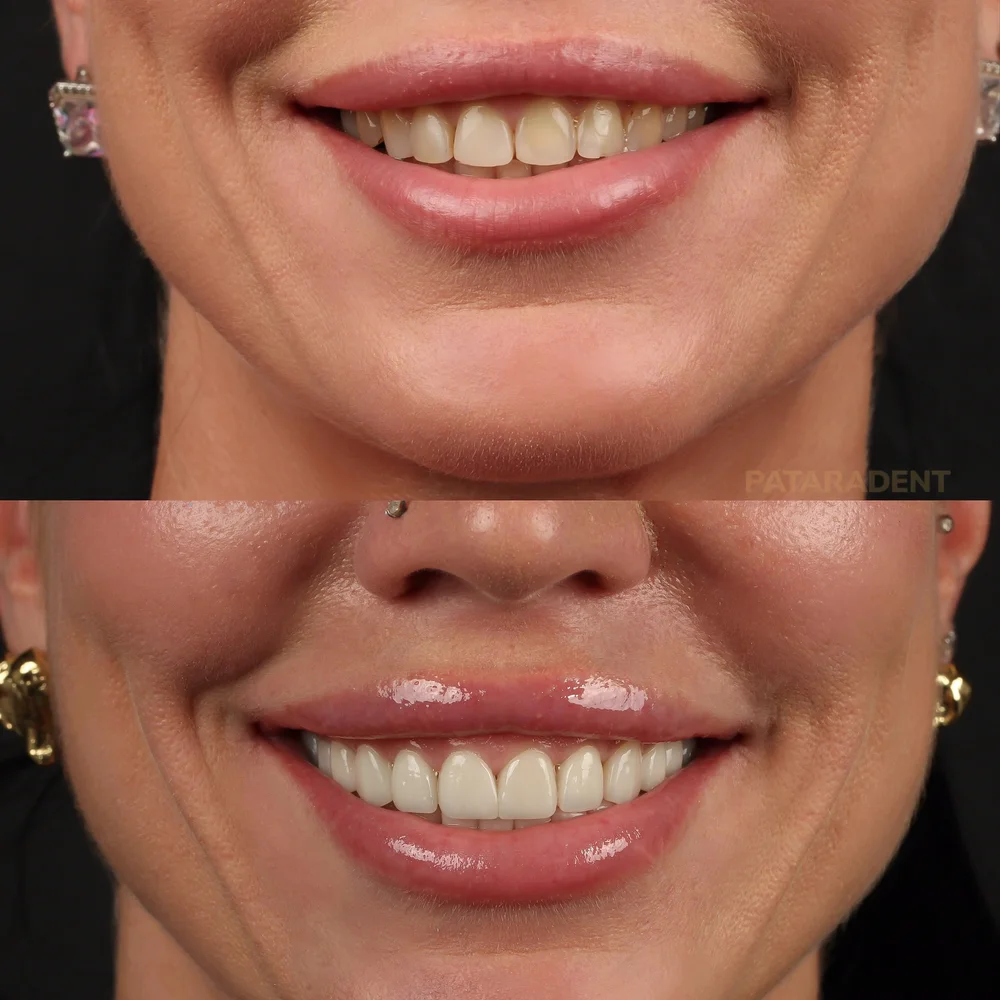
- Brush twice daily and clean between teeth with floss, interdental brushes or a water flosser.
- Wear a night guard if you grind or clench.
- Do not open bottles or bite very hard objects with your teeth.
- Have a check-up and professional cleaning every 6–12 months.
- Remember that whitening does not change the colour of ceramic.
Contact your dentist or the clinic if you notice: swelling with fever, bleeding or pus around an implant, a loose crown or bridge, a chipped or detached veneer, a bite that feels high, or sensitivity that does not settle. Long-lasting results start with planning; see how veneers and crowns are planned at our clinic.

Start your treatment planning
Questions About Aftercare Before You Book?
Ask us what documents you will receive, how follow-up questions are handled and what to do if you need help after returning home.
Frequently Asked Questions
Will the NHS treat problems from dental work abroad?
The NHS may provide urgent care, but ongoing correction of privately funded treatment is not guaranteed. Many patients use a private dentist for follow-up.
What records should I ask for after treatment abroad?
A treatment summary, before and after X-rays, implant brand and component details, crown and veneer materials and shades, prescribed medicines and written guarantee terms.
How often should I see a dentist after veneers or implants?
Most patients should have a check-up and professional cleaning every 6–12 months, or as recommended by their dentist.
What should I do if a veneer comes off?
Keep the veneer safe, avoid chewing on that area and contact your dentist or the clinic. Do not try to glue it back yourself.
Can my local dentist work on implants placed abroad?
Usually yes, if they know the implant system and components used. This is why detailed implant records are so important.